About Edible Oil Refinery Plant
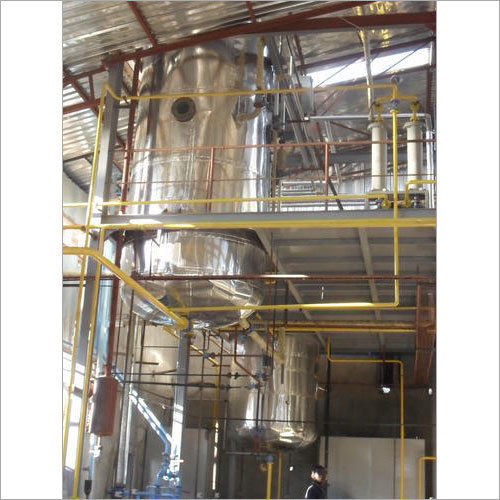
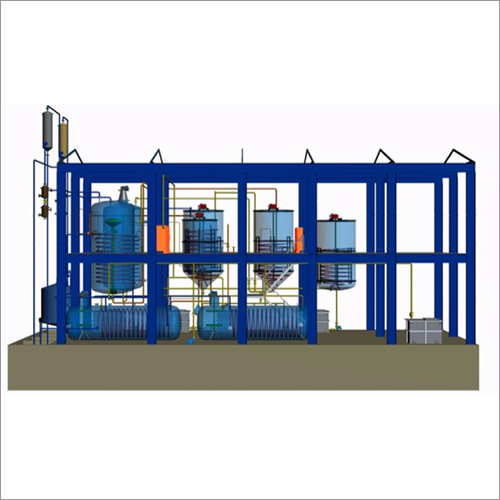
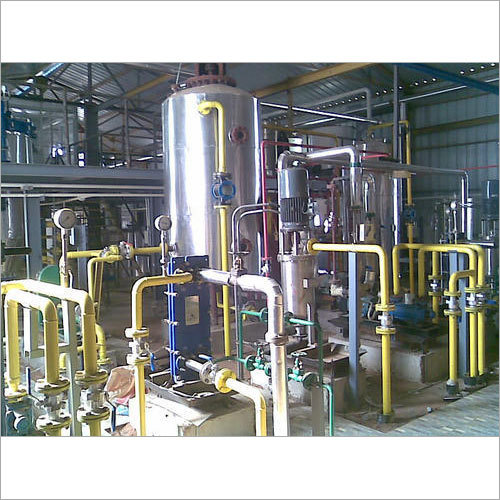
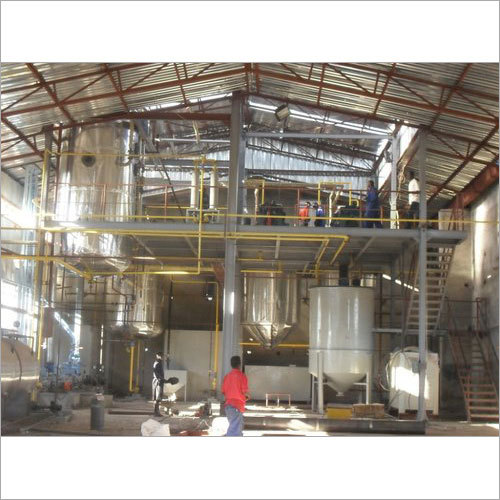
Edible Oil Refinery Plant offered by us, necessitates precision in machinery while guaranteeing the least amount of impurities and odor-producing agents are added. This plant removes these undesirable elements and can refine nearly all types of oils. Crude oils and fats recovered through mechanical expulsion or solvent extraction contain a number of undesirable components. Edible Oil Refinery Plant is very much liked and highly appreciated by people, in the market. This plant is very cost effective and can be easily availed at nominal pricing, by our valued customers, in bulk quantities. Our refinery plant requires very low maintenance and replacement costs.
Product Details
Processing | Batch and Continous |
Capacity | 1-5 ton/day,60-100 ton/day,20-60 ton/day,5-20 ton/day |
Usage | Soybean Oil,Peanut Oil,Cotton Seed Oil,Sunflower Oil |
Automatic Grade | Automatic |
I Deal In | New Only |
Design | Customized |
Condition | New |
Material | MS & SS |
Usage/Application | Cotton Seed Oil |
Automation Grade | Semi-Automatic |
Brand | Mitsun |
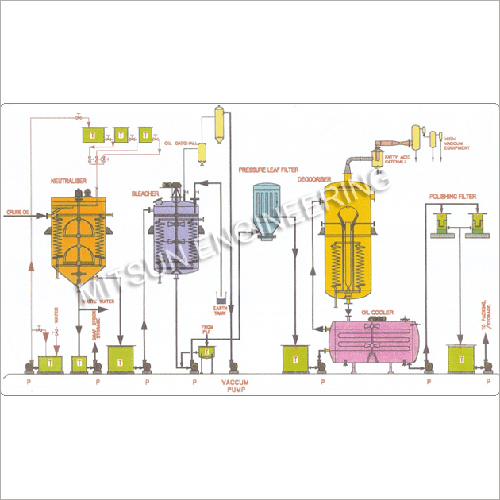
Advanced Refining ProcessThis plant utilizes a comprehensive refining sequence: neutralization removes free fatty acids, bleaching eliminates impurities, dewaxing ensures clarity, and deodorizing provides neutral taste and aroma. The process operates efficiently at temperatures from 60C to 260C for optimum results.
Versatile ApplicationsSuitable for refining a range of vegetable oilsincluding soybean, sunflower, palm, and cottonseedthis refinery plant offers customizable output capacities. It adapts seamlessly to the requirements of various oil producers, from small batches to large-scale operations.
Flexible Installation and OperationChoose from containerized, skid-mounted, or on-site erected installations. The plant can be powered by thermic fluid, electricity, or steam, making it ideal for diverse operational environments. Standard utilities required include electricity, water, steam, and compressed air.
Safety, Compliance, and EfficiencyEngineered for operational safety, the plant features automated safety interlocks and emergency shut-down. It meets international environmental standards and includes a standard spare parts package for the first year, ensuring continuous, compliant, and efficient production.
FAQs of Edible Oil Refinery Plant:
Q: How is the edible oil refining process carried out in this plant?
A: The refinery utilizes sequential processesneutralization, bleaching, dewaxing, and deodorizing. Each step specifically targets impurities, unwanted colors, waxes, and odors, resulting in high-quality edible oil suitable for consumption and commercial applications.
Q: What oils can be refined using this plant?
A: The plant is designed to refine soybean oil, sunflower oil, palm oil, cottonseed oil, and many other vegetable oils, ensuring broad compatibility and versatility for various producers.
Q: When is it best to opt for containerized or skid-mounted installations?
A: Containerized or skid-mounted installations are ideal for projects requiring fast deployment, relocatable setup, or minimal onsite construction. These options also reduce installation time and can be customized to site-specific needs.
Q: Where can this refinery plant be installed?
A: The plant can be installed in various industrial settings, including factories, processing units, or export hubs across India and abroad. Installation types include containerized units, skid-mounted assemblies, or traditional on-site erection.
Q: What are the main benefits of using this refinery plant?
A: Key benefits include an oil recovery rate of over 99%, compliance with international environmental standards, user-friendly PLC control, customizable output capacities, and robust automated safety features.
Q: Does the plant support automated operation and process control?
A: Yes, the plant integrates a PLC (Programmable Logic Controller) control panel, enabling either semi-automatic or fully automatic operation based on customer requirements, which enhances reliability, monitoring, and ease of use.
Q: What utilities and resources are required for operation?
A: Essential utilities include electricity, water, steam, and compressed air. Power requirements vary with plant capacity, ranging from 15 kW to 150 kW. The plants operation temperature spans from approximately 60C up to 260C, depending on the process phase.
 Call Us : 08045477709
 Chat with us


 Send Inquiry





 Send Inquiry

 Send Inquiry
 Send Inquiry
 Send SMS
 Call Me Free
